What Is Dry Needling? And is it the same as acupuncture?
If you've ever had acupuncture and wondered whether dry needling is just a rebranded version of the same thing, you're not alone. It's one of the most common questions I get, and the short answer is: same tool, completely different philosophy.
The needle is where the similarity ends.
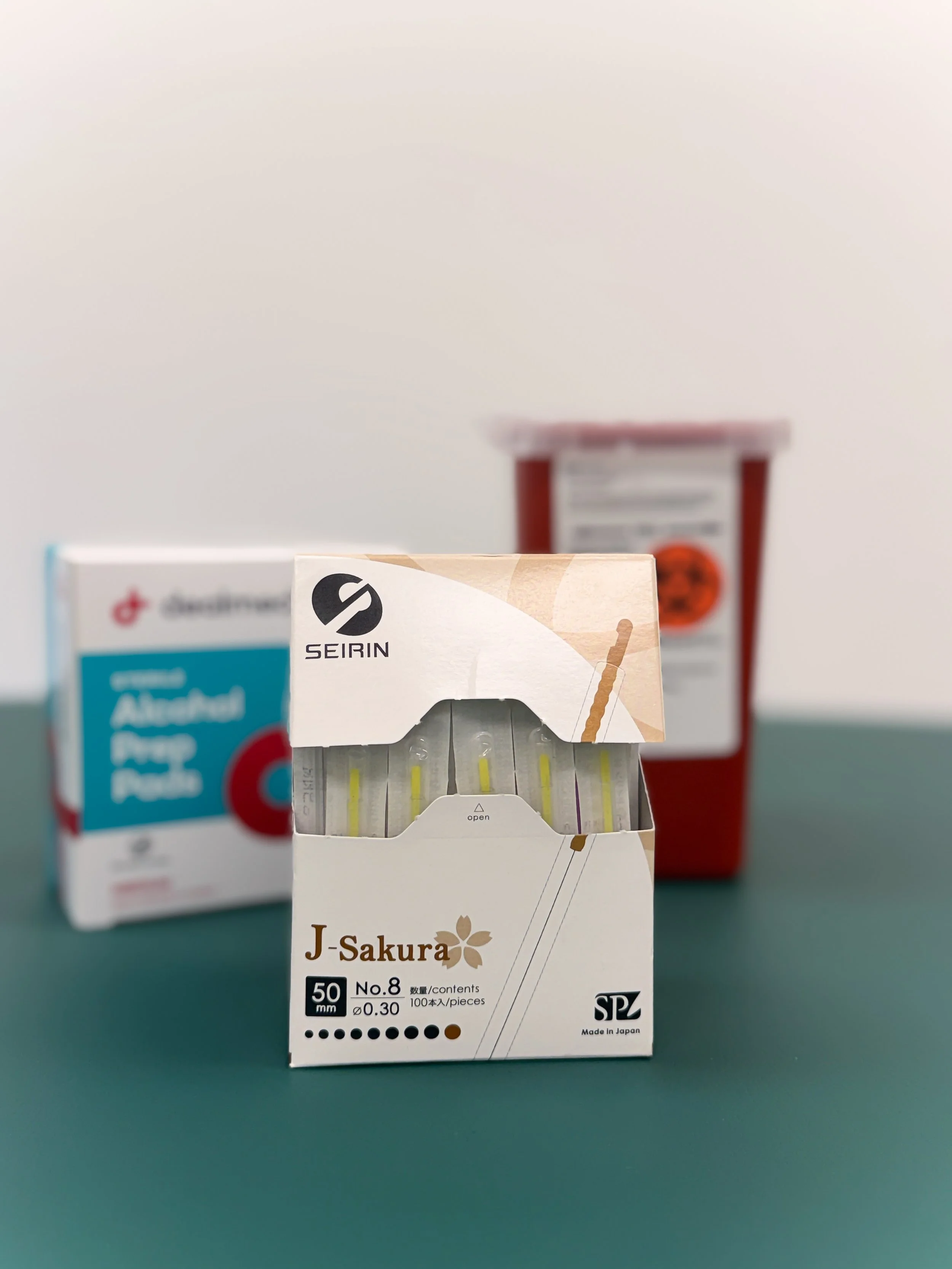
Acupuncture is rooted in Traditional Chinese Medicine. It works with the body's energy pathways, called meridians, to restore balance and promote overall wellness. It's a powerful practice, but it's not what's happening when your physical therapist picks up a needle.
Dry needling is a western, anatomy-based technique. The goal is simple and targeted: find the muscle that's guarding, compensating, or just plain stuck- and release it. Those tight, irritable spots you feel when someone digs into your upper traps or the base of your skull? Those are trigger points. And a well-placed needle gets there faster than almost anything else.
Why "dry?"
No medication, no injection. Just a thin monofilament needle going directly into the tissue. The name distinguishes it from "wet" needling, which involves injecting a substance.
What does it actually feel like?
Honestly, it feels weird but in the best way. You might feel a brief muscle twitch, a deep ache, or a release of tension you didn't even realize you were holding. Most people describe it as immediately different from anything else they've tried. That's because it is.
Potential benefits include:
Reduced muscle tension and trigger point pain
Improved range of motion
Decreased pain sensitivity in chronic areas
Faster tissue recovery alongside other treatments
A few things to know going in:
Mild soreness for 24-48 hours afterward is completely normal (similar to after a workout)
Occasional light bruising at the needle site
Temporary fatigue after a session
Rarely, lightheadedness — easily managed by staying hydrated beforehand
The important thing to understand about dry needling:
It's not a standalone fix. It's an effective that works best as part of a bigger picture. When combined with hands-on manual therapy, movement analysis, and targeted exercise, the results compound. The needle releases the tissue. The work that follows teaches your body what to do with that release. That's the difference between temporary relief and actually solving the problem.
Curious whether dry needling might be right for what you're dealing with? Reach out and I’ll be happy to talk through it before you book an appointment.