Why Having Back Pain Changed How I Treat It
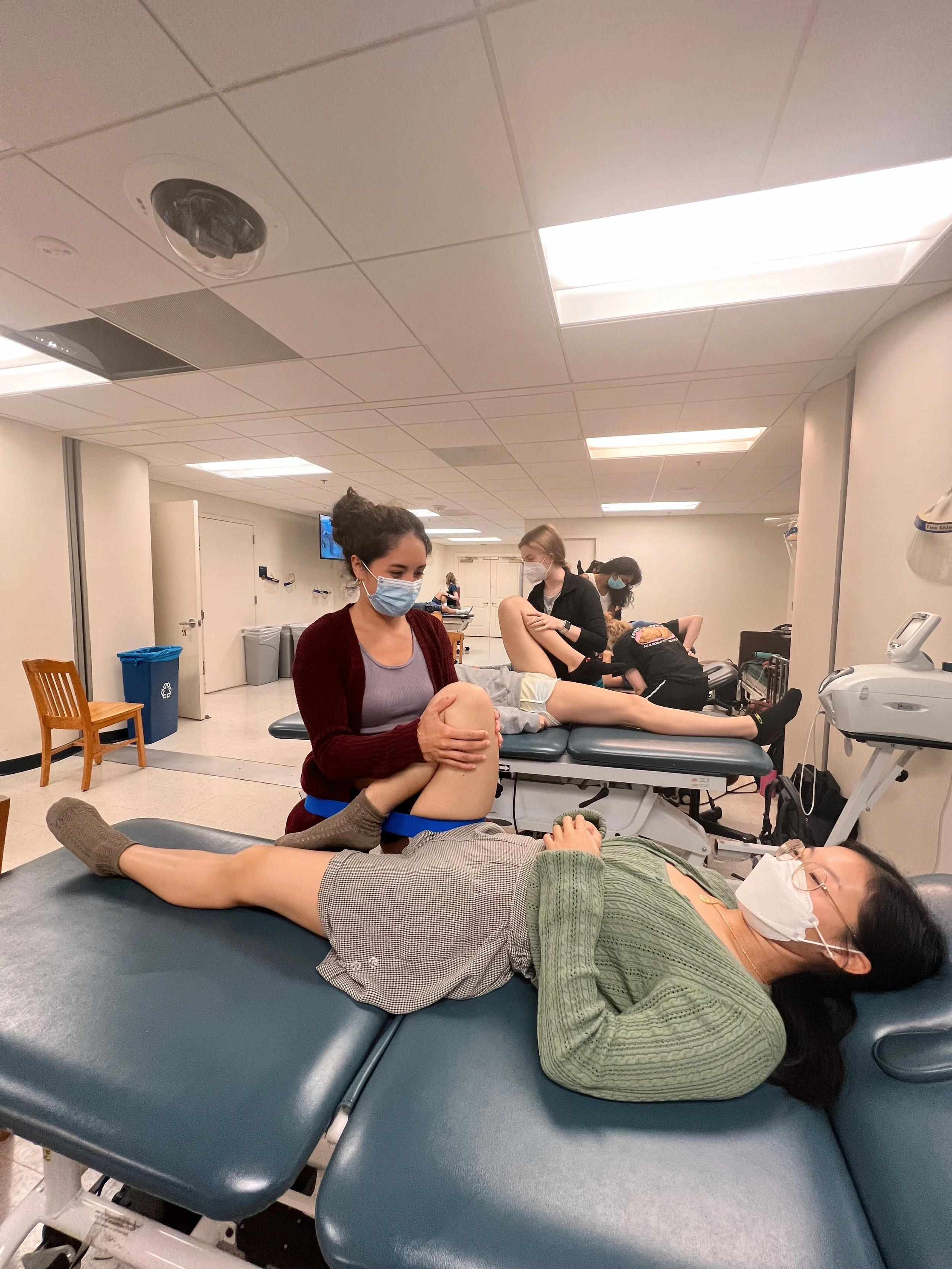
Learning how to use a mobilization belt for the first time in PT school
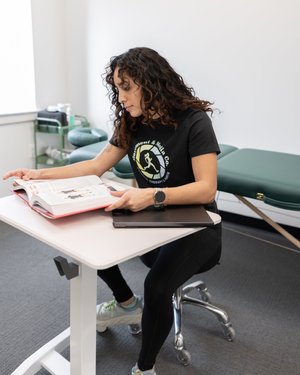
When I was in PT school, I had no idea I was slowly developing the problem that would lead me to approach back pain rehab the way I do today. I spent my days in class and my nights hunched over textbooks and laptops, fully convinced that posture was something other people struggled with. But surely not me! By my third year of PT school, needing an upper back massage was a regular thing. The pain was noticeable on a regular basis, and the irony wasn’t lost on me that I was learning how to treat the very problem I was creating for myself. But the upside to all this, is that I remained curious about back rehab.
The First Realization: Posture Isn't Just About Sitting Up Straight
The obvious culprit was the amount of hours I spent sedentary studying and being in lecture. I often did homework in bed, or at my desk with my torso twisted all the way to one side. And when we got to the posture analysis lectures, we took photos of each other walking and I saw a classic rounded shoulders and forward head posture. Yikes. That’s when I started to stand up and sit up straighter, which was only the beginning.
Over the years, I learned that real posture changes require rebuilding the relationship with how you carry yourself. It meant awareness, consistency, and understanding that posture isn't static. Your body's position changes throughout the day, and especially when you can't escape desk work (which, let's be honest, most of us can't), you have to work with that reality instead of pretending you'll suddenly become someone who stands all day.
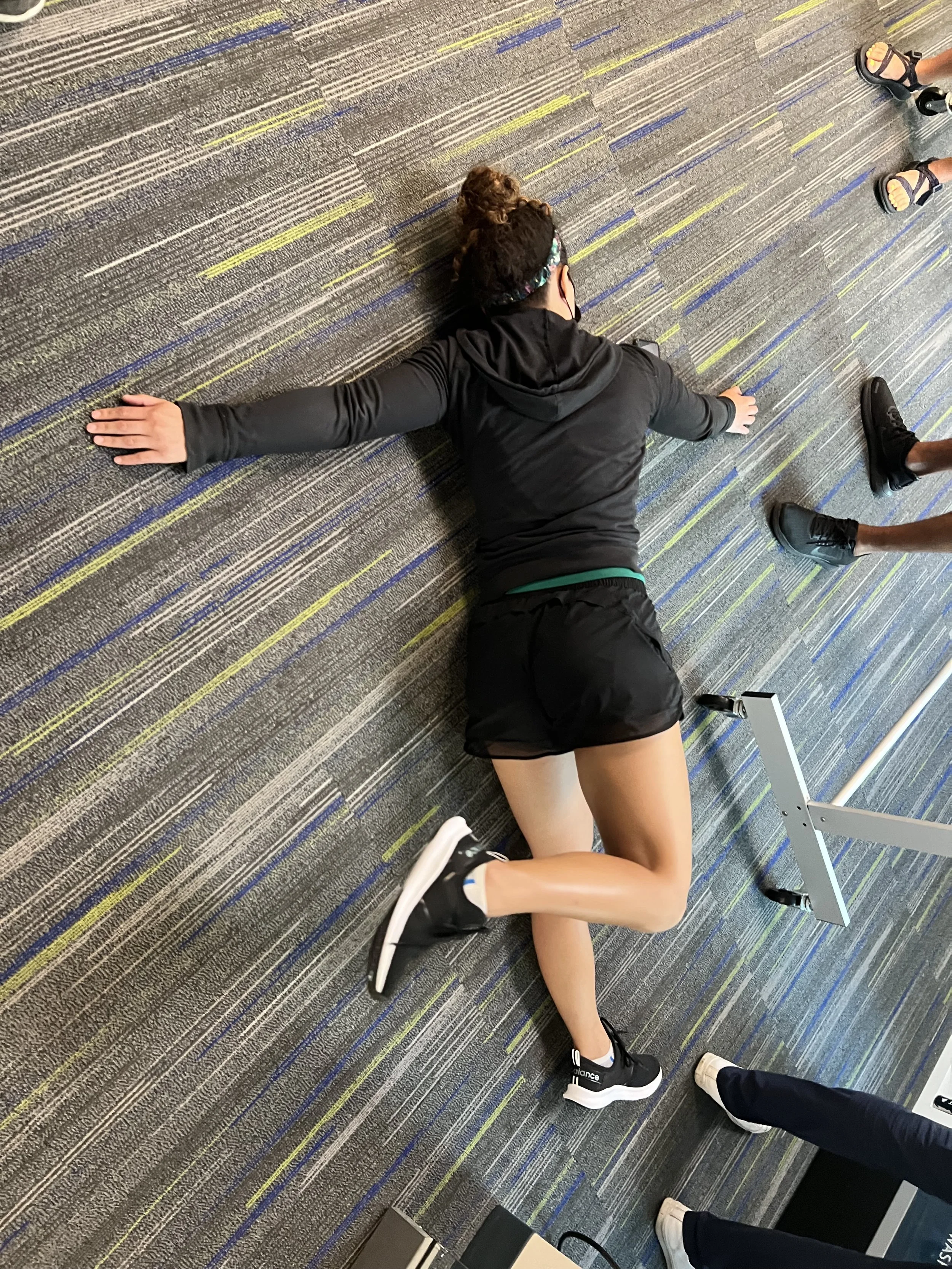
PT school study breaks
The Second Realization: Strength Training Actually Matters
Once I started paying attention to my posture, I noticed something else: I didn't have the muscular endurance to maintain a neutral spine for eight hours. My postural muscles fatigued, and when they fatigued, I compensated. My upper traps started taking over. My middle back got longer and weaker. The whole system got imbalanced.
This is when I started deliberately strength training, and it changed everything. Rows, carries, scapular work. I learned that addressing back pain isn't about stretching out the tight muscles first and calling it a day. You have to build the stability to support the positions you spend the most time in.
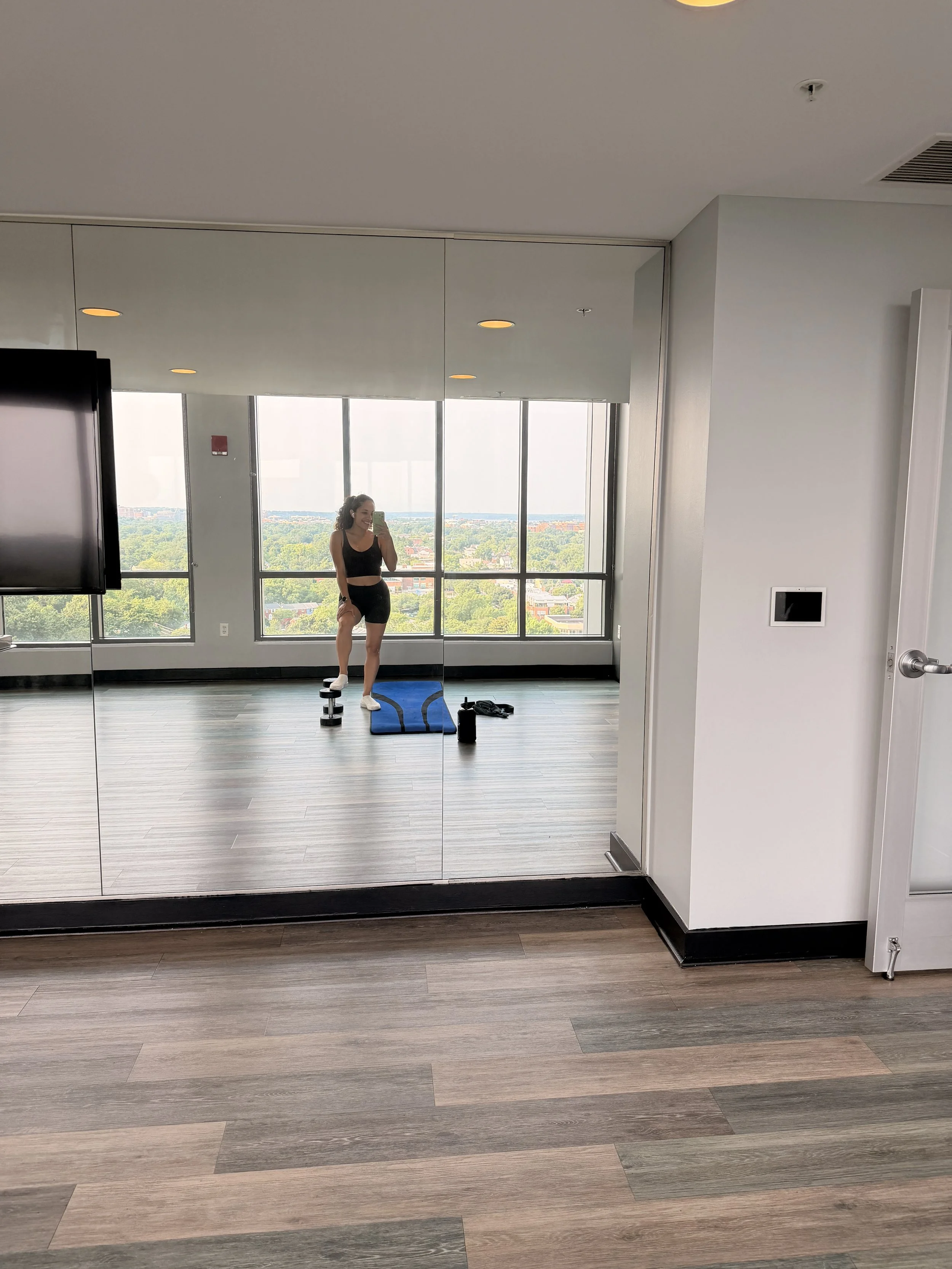
Strength training is still part of my routine today
The Third Realization: Myofascial Release and Breathing Are Part of the Solution
Around this same time, I discovered how much myofascial release work could shift my pain. A massage, some self-release techniques with tools, superficial fascia mobilizations, and even just working on trigger points in my upper traps and mid-back, and suddenly the tension would ease. It wasn't a permanent fix, but the immediate relief was real.
And when I focused on breathing during myofascial work, it felt like advancing to a whole new level of back rehab. Slowing down and taking deep breaths while releasing tense tissue allowed my whole nervous system seemed to downregulate, and that is why I’ll often cue it for my patients today, pairing it with a truly calming environment and a dedication to hearing all my patients out because we all have concerns about our pain.
Putting It Together: Why This Matters for How I Treat You
My upper back pain taught me that back pain rarely has one cause, and it almost never has one solution. The desk setup matters. The strength matters. The mobility work matters. But so does your nervous system. Your breathing patterns. Your ability to relax tissue that's been locked in tension.
When I work with clients, especially those with upper back pain or desk-related dysfunction, I'm not just addressing the mechanics. I'm looking at your whole system: how you're positioned, whether your muscles have the endurance to support that position, what restrictions you have, whether you're breathing accessorily through your upper traps instead of using your diaphragm, if your hip mobility is affecting movement mechanics up the trunk, and whether your nervous system is stuck in a pattern of holding tension.
The most effective approach combines all of these pieces. We'll work on your ergonomics and desk setup because you can't escape that work. We'll build the strength you need to maintain good positioning without exhausting yourself. We'll address tissue restriction through manual work and targeted stretching. And we'll integrate breathing, myofascial release, and relaxation techniques so your nervous system actually learns to let go of the tension, not just temporarily, but sustainably.
My back pain was frustrating when I was living through it, and honestly, sometimes it comes back. I can usually find the same pattern of faults in different contexts such as my running and dancing movement and breathing mechanics, and seasons of life where I spend more time at a desk vs not. The good part is that I can now make the changes I need to make to feel back to normal without years of trial and error.
If you're dealing with back or neck pain that doesn't seem to get better, let's look at the whole picture. Let's find out what's actually driving your pain, not just what hurts in the moment.
Ready to address your back pain with a comprehensive approach? Let's start with a consultation to figure out what's really going on.